
Redesigning an Enterprise Investment Platform Across 150+ Screens
Redesigning an investment management platform. As their business scaled, their platform became increasingly complex. Advisors had to navigate multiple pages just to find client or fund data, onboarding was slow and error-prone, and dashboards lacked consistency which directly impacted decision-making.
So the challenge wasn’t just improving UI it was simplifying a highly data-heavy, business-critical system.
Understanding the Problem
I started with stakeholder interviews and a UX audit. What stood out was that users were spending more time searching for information than actually using it.
Fragmented information across multiple pages
Confusing navigation and unclear hierarchy
Redundant and inefficient workflows
Overwhelming onboarding forms
Inconsistent data representation
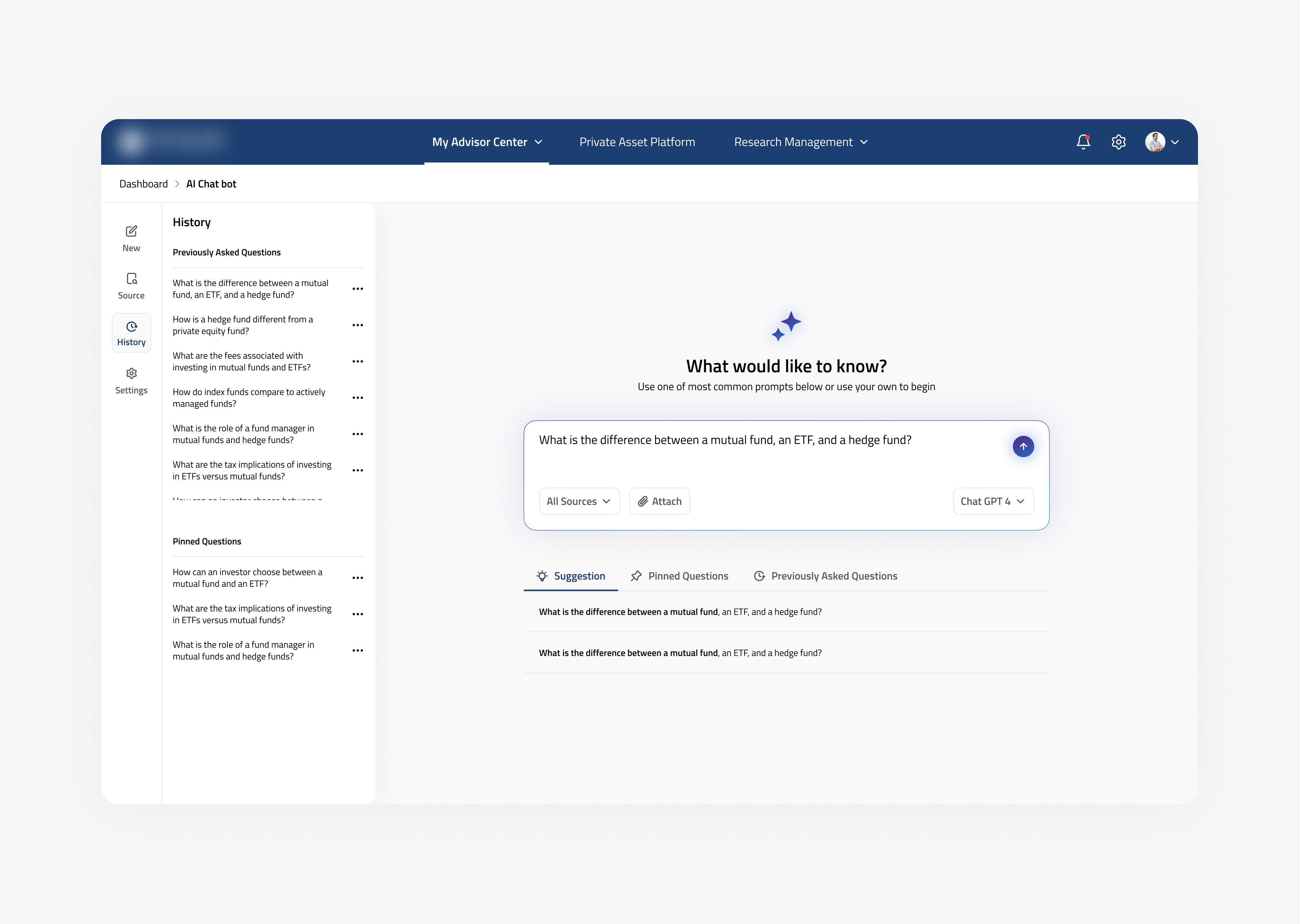
No centralized access to critical insights
This pointed to a deeper issue poor information architecture and lack of system design thinking.
Redesign Approach
I conducted: Stakeholder interviews, UX audits, Workflow mapping & Data structure analysis This revealed that users were spending more time finding information than acting on it.
Created clear hierarchies for client, advisor, and fund data
Grouped related information logically
Reduced navigation depth
Designed task-oriented flows
Workflow Simplification
Before | After |
|---|---|
Multi-step, redundant processes | Streamlined flows |
High error rates | Context-aware actions |
Manual data re-entry | Reduced steps |
Onboarding & Data Redesign
Broke long forms into step-based journeys
Added progress indicators
Introduced inline validation
Reduced unnecessary fields
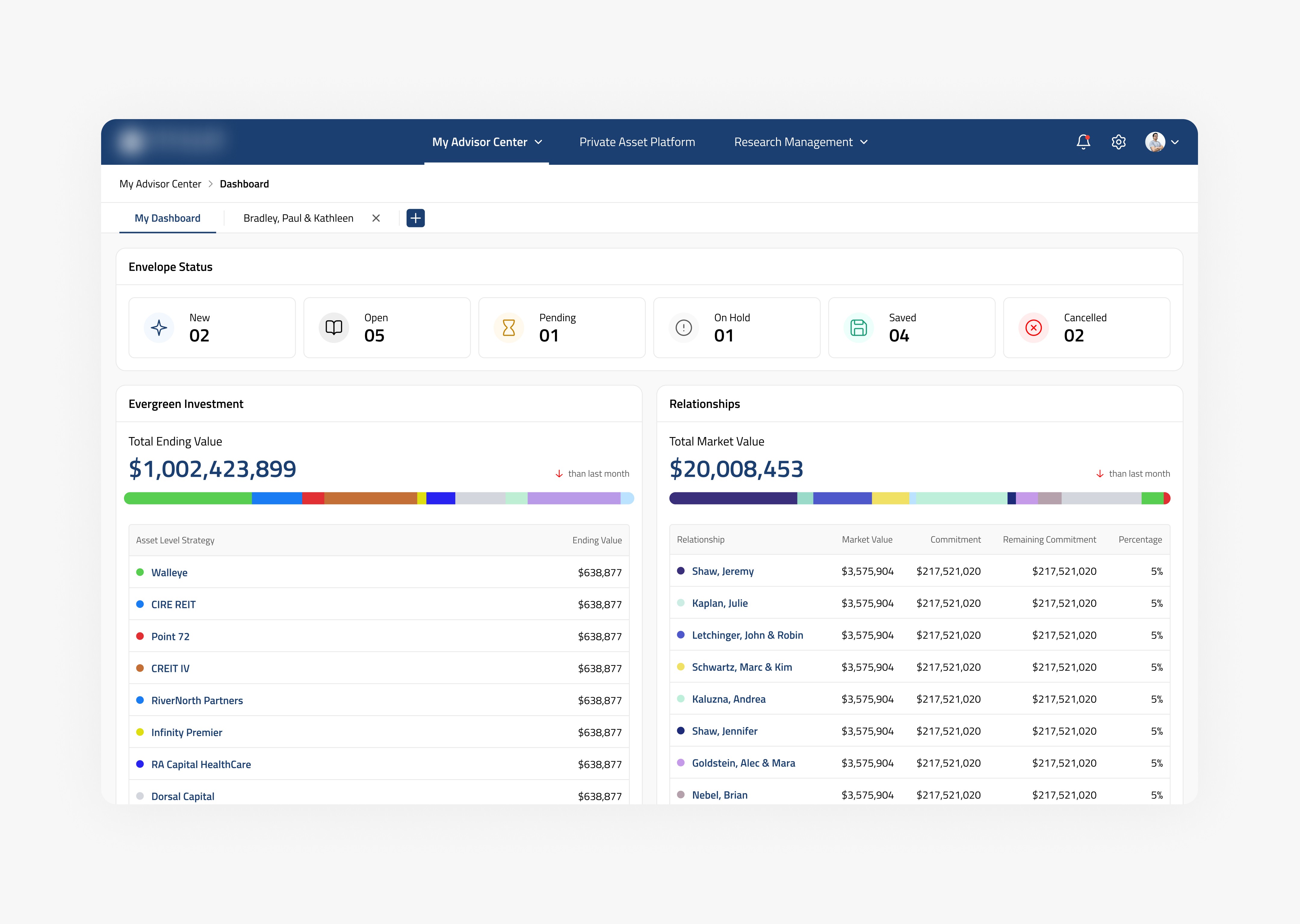
Designed centralized dashboards
Standardized financial data visualization
Created a “single source of truth”
Design System for Scale
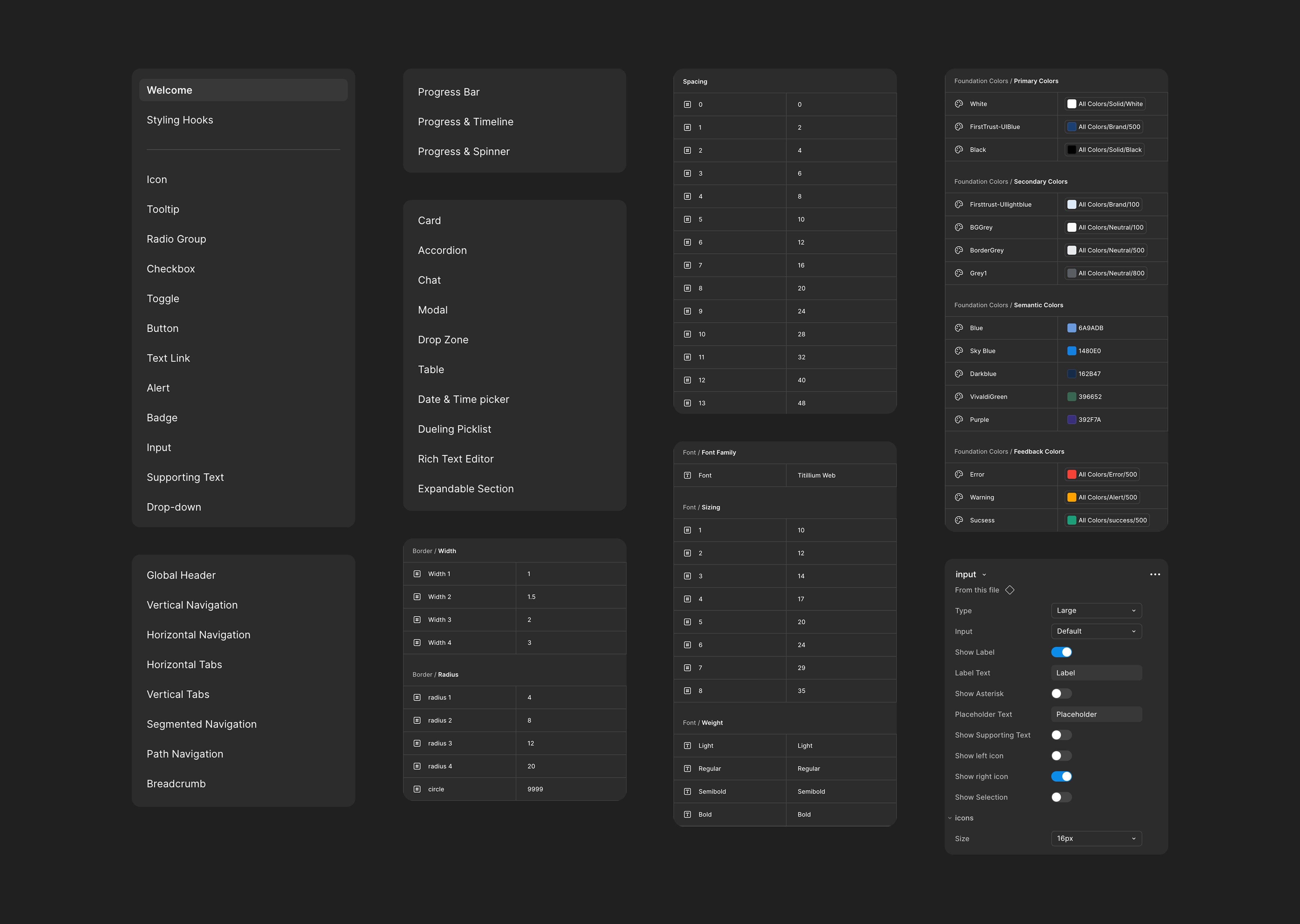
Built a reusable component library
Applied across 150+ pages
Ensured consistency across dashboards, forms, and reports
Maintain UI consistency
Improve development efficiency
Support long-term scalability
For onboarding, I redesigned long forms into step-based flows with progress indicators and inline validation which significantly reduced friction.
Results
Faster administrative workflows
Reduced onboarding time
Improved platform adoption
Better decision-making through clear data
And a 5/5 client satisfaction score
Redesigning an Enterprise Investment Platform Across 150+ Screens
Redesigning an investment management platform. As their business scaled, their platform became increasingly complex. Advisors had to navigate multiple pages just to find client or fund data, onboarding was slow and error-prone, and dashboards lacked consistency which directly impacted decision-making.
So the challenge wasn’t just improving UI it was simplifying a highly data-heavy, business-critical system.
Understanding the Problem
I started with stakeholder interviews and a UX audit. What stood out was that users were spending more time searching for information than actually using it.
Fragmented information across multiple pages
Confusing navigation and unclear hierarchy
Redundant and inefficient workflows
Overwhelming onboarding forms
Inconsistent data representation
No centralized access to critical insights
This pointed to a deeper issue poor information architecture and lack of system design thinking.
Redesign Approach
I conducted: Stakeholder interviews, UX audits, Workflow mapping & Data structure analysis This revealed that users were spending more time finding information than acting on it.
Created clear hierarchies for client, advisor, and fund data
Grouped related information logically
Reduced navigation depth
Designed task-oriented flows
Workflow Simplification
Before | After |
|---|---|
Multi-step, redundant processes | Streamlined flows |
High error rates | Context-aware actions |
Manual data re-entry | Reduced steps |
Onboarding & Data Redesign
Broke long forms into step-based journeys
Added progress indicators
Introduced inline validation
Reduced unnecessary fields
Designed centralized dashboards
Standardized financial data visualization
Created a “single source of truth”
Design System for Scale
Built a reusable component library
Applied across 150+ pages
Ensured consistency across dashboards, forms, and reports
Maintain UI consistency
Improve development efficiency
Support long-term scalability
For onboarding, I redesigned long forms into step-based flows with progress indicators and inline validation which significantly reduced friction.
Results
Faster administrative workflows
Reduced onboarding time
Improved platform adoption
Better decision-making through clear data
And a 5/5 client satisfaction score
Redesigning an Enterprise Investment Platform Across 150+ Screens
Redesigning an investment management platform. As their business scaled, their platform became increasingly complex. Advisors had to navigate multiple pages just to find client or fund data, onboarding was slow and error-prone, and dashboards lacked consistency which directly impacted decision-making.
So the challenge wasn’t just improving UI it was simplifying a highly data-heavy, business-critical system.
Understanding the Problem
I started with stakeholder interviews and a UX audit. What stood out was that users were spending more time searching for information than actually using it.
Fragmented information across multiple pages
Confusing navigation and unclear hierarchy
Redundant and inefficient workflows
Overwhelming onboarding forms
Inconsistent data representation
No centralized access to critical insights
This pointed to a deeper issue poor information architecture and lack of system design thinking.
Redesign Approach
I conducted: Stakeholder interviews, UX audits, Workflow mapping & Data structure analysis This revealed that users were spending more time finding information than acting on it.
Created clear hierarchies for client, advisor, and fund data
Grouped related information logically
Reduced navigation depth
Designed task-oriented flows
Workflow Simplification
Before | After |
|---|---|
Multi-step, redundant processes | Streamlined flows |
High error rates | Context-aware actions |
Manual data re-entry | Reduced steps |
Onboarding & Data Redesign
Broke long forms into step-based journeys
Added progress indicators
Introduced inline validation
Reduced unnecessary fields
Designed centralized dashboards
Standardized financial data visualization
Created a “single source of truth”
Design System for Scale
Built a reusable component library
Applied across 150+ pages
Ensured consistency across dashboards, forms, and reports
Maintain UI consistency
Improve development efficiency
Support long-term scalability
For onboarding, I redesigned long forms into step-based flows with progress indicators and inline validation which significantly reduced friction.
Results
Faster administrative workflows
Reduced onboarding time
Improved platform adoption
Better decision-making through clear data
And a 5/5 client satisfaction score